1. Check what you already have access to
An unused top, a stored family piece, or a previous project may be worth evaluating first. Record its measurements and condition so you can compare it fairly with buying new materials.
2. Compare finished and unfinished surfaces
A surface that costs more upfront may need less preparation. An unfinished option gives you more control but requires materials, workspace, and time. Compare both as complete projects.
3. Ask what the dimensions let you build
Choose the finished table size before buying a tempting offcut or secondhand find. An inexpensive piece that cannot provide the surface you need is not a useful saving.
4. Include transport and handling
A top needs to reach your workspace and eventually your dining room. Consider its size, weight, and access route when calculating the practical cost of a promising find.
5. Budget for the surface you will actually use
A dining surface needs a finish appropriate to its material and intended use. Follow the finish manufacturer's preparation and curing directions when comparing how much work each option requires.
6. Resolve the base pairing before purchasing
Check support, overhang, and attachment requirements for the particular top. For a specialty surface such as a slab or resin-and-wood top, discuss the complete project rather than relying on appearance alone.
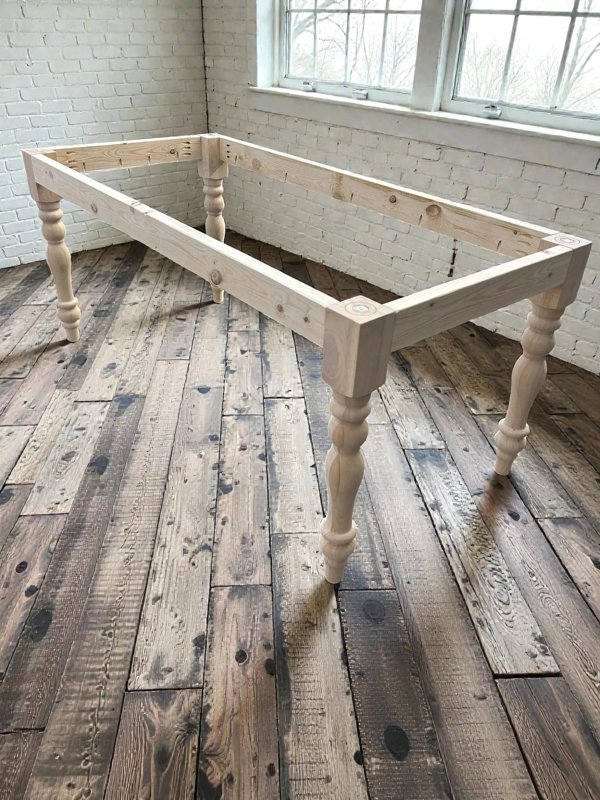
Browse the turned-leg kit alongside your tabletop plans, and ask about fit before buying either part.
Plan your version
Review current kit options, dimensions, and included components on Etsy. This is an unfinished base for self-assembly; the tabletop and finish are separate. Assembly instructions are not included.
Shop the turned-leg DIY base on Etsy ↗Written by Curbside Treasures. This guide features our own product.