1. Let one existing detail lead
Use a chair, cabinet, floor tone, or piece of art as your reference. A specific starting point is easier to work with than trying to recreate an entire inspiration photograph.
2. Choose the tabletop for its character
Consider the grain, edge, and overall appearance you want. Verify compatibility with your chosen base before purchasing a top, especially when its shape or construction differs from a conventional rectangle.
3. Pick a base color with purpose
A quiet neutral can draw attention to the top. A deeper color can give the table a stronger presence. View samples in your own room because surrounding surfaces change how a color reads.
4. Decide how much contrast you enjoy
The top and base do not have to look identical to feel connected. Compare samples together and decide whether you prefer a clear two-tone look or a more closely related palette.
5. Keep the chairs you genuinely like
A new table does not automatically require matching new seating. Lay out your current chairs, check their fit, and use the table finish to help the pieces feel intentional together.
6. Leave room for ordinary life
Think about placemats, serving dishes, schoolwork, and a laptop as well as decorative objects. A personal table should look good while doing the jobs your household needs it to do.
Bring your room measurements and design ideas to the listing, then decide whether the turned-leg base suits the table you want to create.
Plan your version
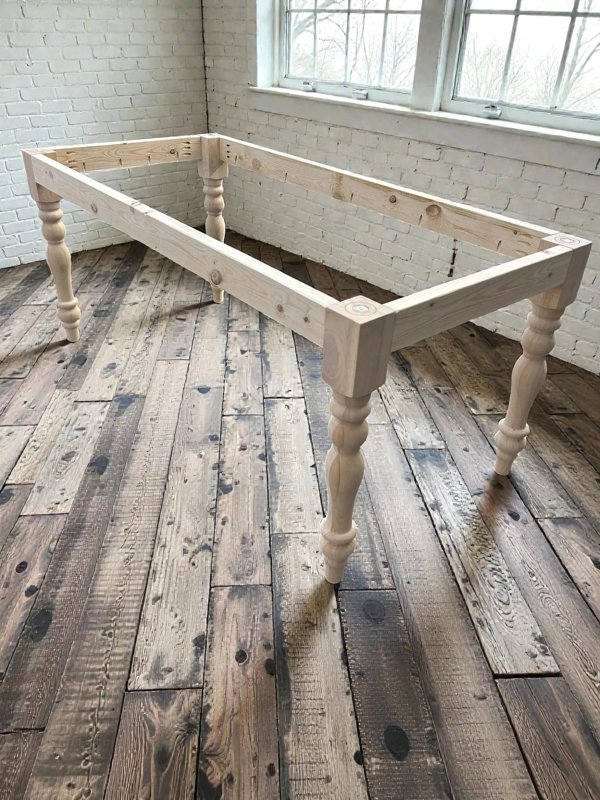
Review current kit options, dimensions, and included components on Etsy. This is an unfinished base for self-assembly; the tabletop and finish are separate. Assembly instructions are not included.
Shop the turned-leg DIY base on Etsy ↗Written by Curbside Treasures. This guide features our own product.