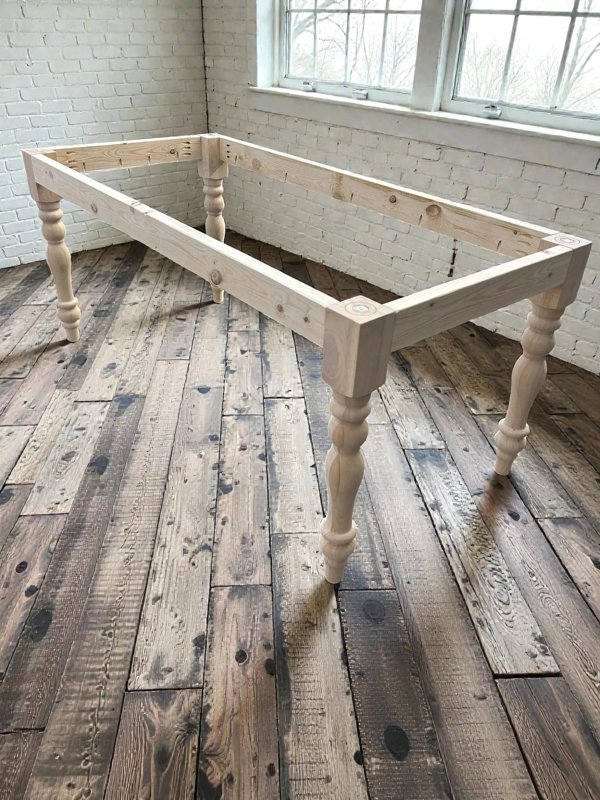
Butcher block
A prepared butcher-block panel offers a familiar wood surface without making a panel from loose boards. Rhonda's supplied Etsy review describes this kind of build. Check the panel manufacturer's finishing and mounting directions, including allowance for seasonal movement, before ordering the base.
Glued-up hardwood
Oak, maple, or another hardwood can create a distinctive dining surface. A maker can help prepare a flat, sound panel and an appropriate attachment method. Different species, thicknesses, and widths change the project; specify the actual top rather than asking whether hardwood in general fits.
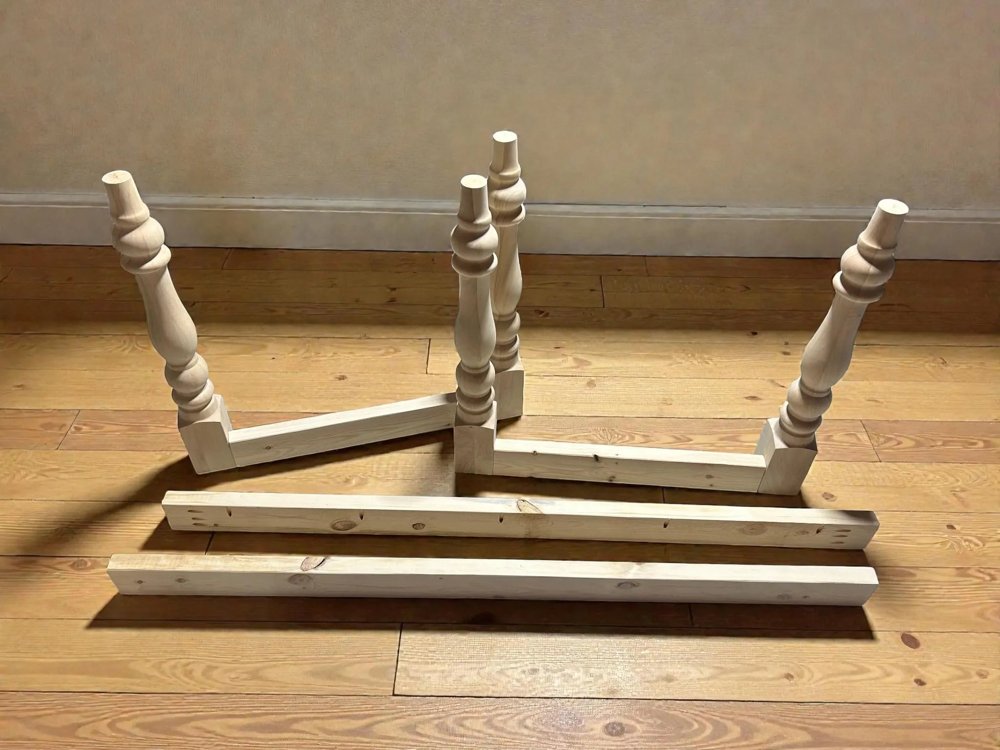
The shape is ready. The choices are yours.
Start with an unfinished foundation and choose the tabletop and finish around your project.
Explore the turned-leg base kit ↗Reclaimed barnwood
Reclaimed boards bring history and variation, but may need metal detection, cleaning, drying, flattening, and joining. Price that preparation before calling the top a bargain. Confirm it is suitable for indoor furniture and that the final panel is structurally sound.
Live-edge slabs
An organic edge can contrast with the regular turned legs. Check the narrowest usable width and the underside where the base will attach. The slab's weight, voids, and irregular overhang require an individual plan; a dramatic outline alone does not establish a stable table.
Walnut slabs
Brandi's supplied review describes a walnut slab pairing. Walnut can be selected as a straight-edged panel or a natural-edge feature, depending on the desired look. Have a maker evaluate the particular slab and verify support before taking a customer example as a specification.
Wood-and-epoxy tops
A river-style top is a specialist option. Resin formulation, cure, thickness, reinforcement, and attachment details depend on its maker. Ask both the top maker and base seller about your design; no epoxy-specific load rating or universal approval is stated for this kit.
A sound existing tabletop
A top you already like may be the most personal choice. Inspect its construction and underside before reusing it. Veneered, hollow, stone, or glass surfaces need their own mounting systems and should never be treated as interchangeable with a solid wood panel.
Your project starts with a base
Four unfinished rubberwood turned legs, prepared pine apron/skirting pieces, and leg-to-apron screws. You supply the top, finish, tools, and suitable top attachments. Assembly instructions are not included; buyers should be comfortable assembling furniture. Legs ship from the supplier and aprons from our shop, so parcels may arrive separately.
Further reading: Bally Block installation guidance on wood movement. Follow your own top maker’s specifications.
Ready to plan your version?
See current kit options, detailed dimensions, price, and availability on Curbside Treasures. Have a particular top in mind? Ask about its dimensions and support needs before ordering.
View the exact turned-leg kit ↗Product details checked October 19, 2026. This guide is written by the seller and features our own kit. General project advice does not replace a top-specific assembly or mounting plan.