1. Design for the meals you actually share
Count your usual seats before planning for an occasional large event. A table that fits everyday life is more useful than one that makes the room difficult to move through.
2. Work with the chairs you already own
Measure their width and height, including arms if they have them. Planning around existing seating can help keep the project focused and reduce the need to replace more furniture.
3. Give the tabletop a clear job
Will it also host homework, crafts, or remote work? Consider how the surface will be used and cared for before choosing its material and finish.
4. Make the spending plan together
Decide what matters most: a particular top, a color, or keeping the total within a set amount. A shared priority list makes it easier to choose where to spend and where to simplify.
5. Allow time for the project to be ready
Plan assembly and finishing around your household schedule. Follow the chosen finish's curing guidance before putting the table into service, rather than treating the last coat as the finish line.
6. Enjoy the first ordinary meal
You do not need a holiday or a matching set of dishes to put the table to work. Sometimes the best project reveal is everyone pulling up a chair on a regular evening.
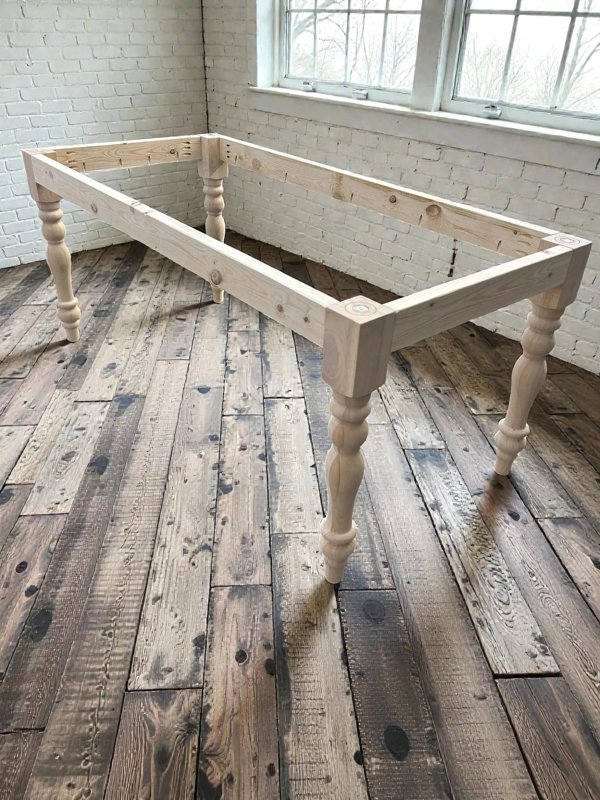
For households interested in assembling and finishing their own farmhouse base, this turned-leg kit offers a place to start planning. The tabletop is purchased or supplied separately.
Plan your version
Review current kit options, dimensions, and included components on Etsy. This is an unfinished base for self-assembly; the tabletop and finish are separate. Assembly instructions are not included.
Shop the turned-leg DIY base on Etsy ↗Written by Curbside Treasures. This guide features our own product.