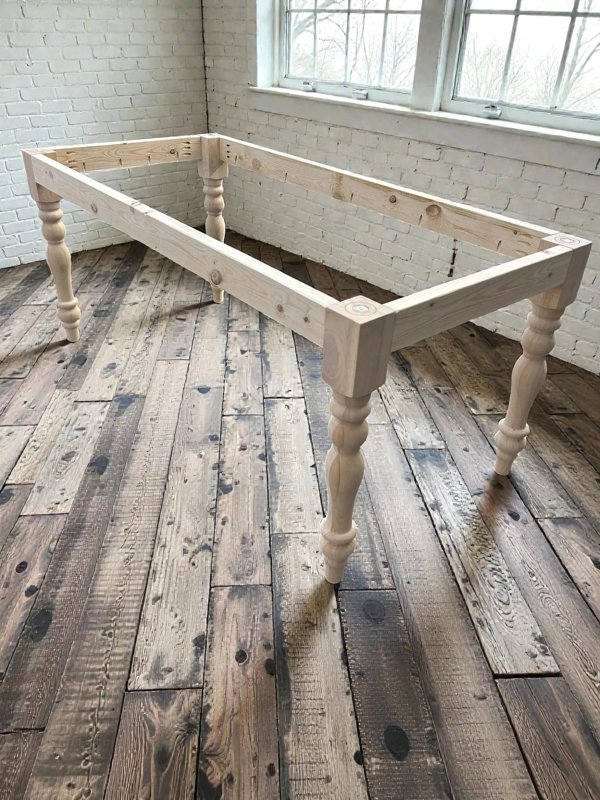
Learn the wood's history
Ask where the boards came from and how they were used or treated. Unknown contamination or coatings can make a piece unsuitable for this project. Character is appealing, but material suitability comes before choosing how much old paint to leave visible.
Check for hidden metal
Old nails and other fasteners can remain below the surface. Have the material checked before machining. Reclaimed lumber often needs specialist preparation, so include that service in the project rather than treating raw boards as a finished tabletop.
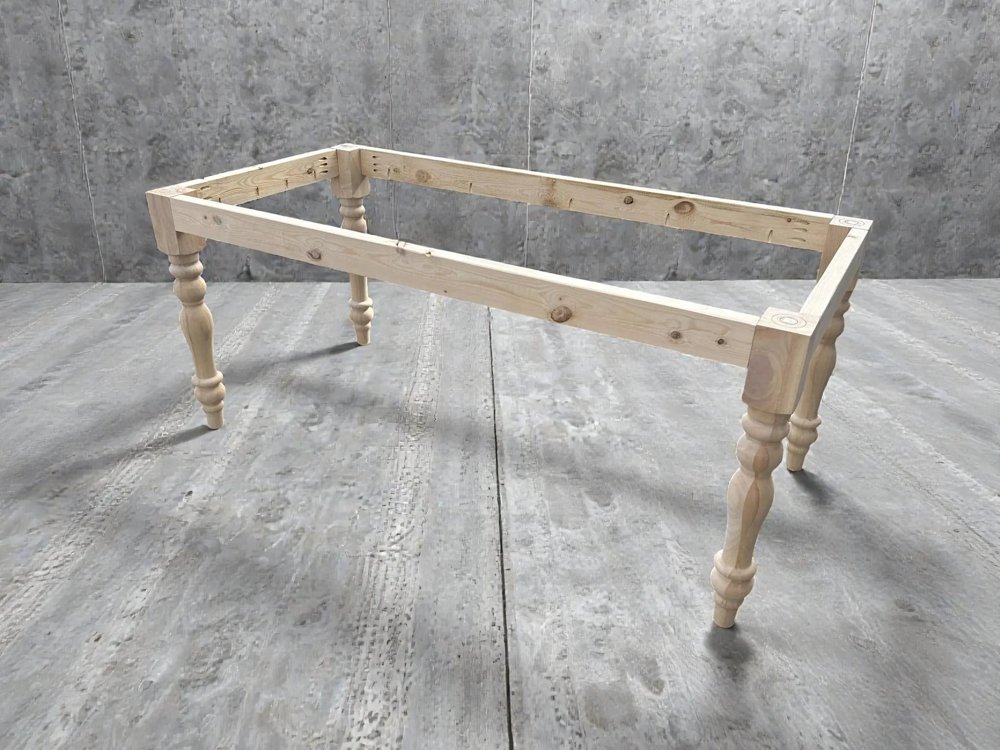
The shape is ready. The choices are yours.
Start with an unfinished foundation and choose the tabletop and finish around your project.
Explore the turned-leg base kit ↗Confirm moisture and condition
A woodworker can evaluate whether the boards are appropriate for the intended indoor environment. Inspect decay, damage, and weak sections. Replacing unsound material early is more sensible than trying to disguise it once the top is assembled.
Decide how smooth it should feel
Deep texture may look attractive but complicate cleaning and writing. Choose which character to retain and which edges or defects need work. The dining surface should fit your everyday routine as well as the visual story.
Create a sound panel
Turning boards into a stable top involves more than laying them side by side. Joining, flattening, and preparation are separate tasks from assembling the base kit. Arrange that work before ordering a base for a size you may not achieve.
Test the finish on representative wood
Reclaimed surfaces may absorb finish unevenly or contain remnants of earlier coatings. Use a finish system appropriate for the material and intended use. A sample helps reveal whether the desired worn look remains practical after protection is applied.
Order around the finished dimensions
Use the completed panel's measurements, thickness, and attachment requirements to choose the base. Extra-long, unusually heavy, or unsupported designs need individual advice. The kit prepares the foundation; it does not qualify every reclaimed top for use.
Your project starts with a base
Four unfinished rubberwood turned legs, prepared pine apron/skirting pieces, and leg-to-apron screws. You supply the top, finish, tools, and suitable top attachments. Assembly instructions are not included; buyers should be comfortable assembling furniture. Legs ship from the supplier and aprons from our shop, so parcels may arrive separately.
Further reading: Bally Block installation guidance on wood movement. Follow your own top maker’s specifications.
Ready to plan your version?
See current kit options, detailed dimensions, price, and availability on Curbside Treasures. Have a particular top in mind? Ask about its dimensions and support needs before ordering.
View the exact turned-leg kit ↗Product details checked October 19, 2026. This guide is written by the seller and features our own kit. General project advice does not replace a top-specific assembly or mounting plan.