Choose a dining-sized panel
Start with the room and chair arrangement, then choose the panel. Countertop stock may come in proportions that need cutting before it works as a dining table. Check whether the seller offers suitable dimensions or whether a local maker must prepare it.
Confirm the panel's construction
Ask about species, thickness, surface condition, and finish. Do not assume every product sold as butcher block has the same specifications. These details influence weight, finished height, care, and how it should attach to the base.
The shape is ready. The choices are yours.
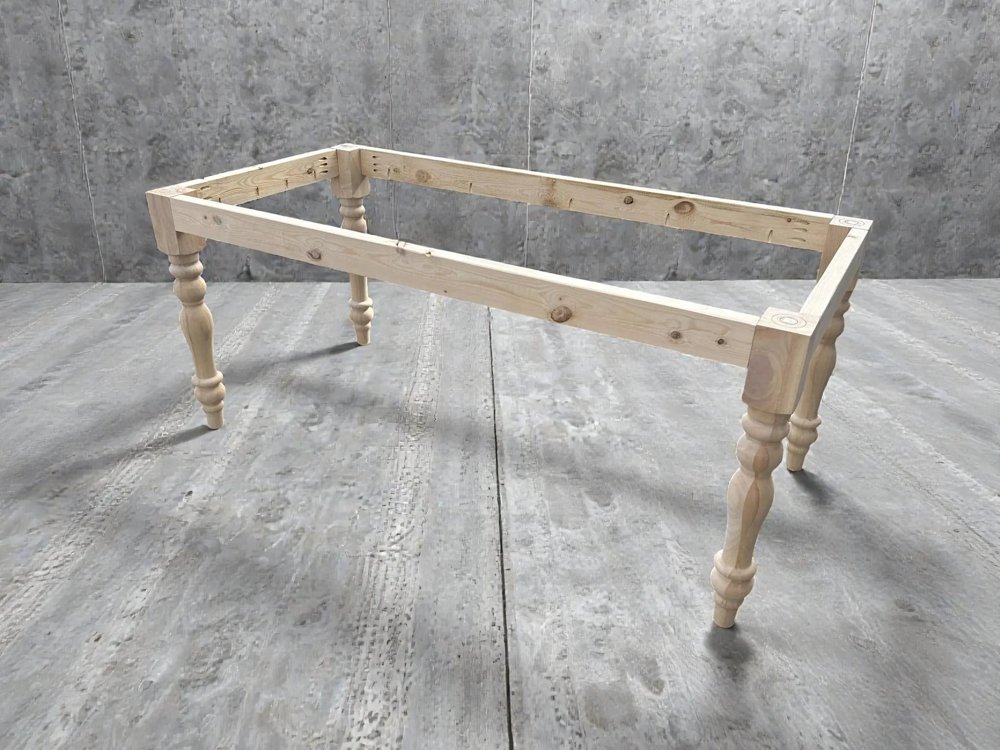
Start with an unfinished foundation and choose the tabletop and finish around your project.
Explore the turned-leg base kit ↗Follow the top maker's mounting guidance
Wood surfaces respond to their environment, so attachment must account for movement. Use the panel manufacturer's requirements rather than improvising a rigid connection. Bally Block's installation guidance explains the importance of allowing expansion and contraction for its wood surfaces.
Choose the right base option
Match the kit to the intended top footprint. Confirm clear attachment areas and comfortable overhang before assembly. If you plan to trim a panel, decide the final size first so the base order is based on the finished top.
Plan the look and care together
A painted base can contrast with the panel's wood pattern, while a stained base may require more sampling. Follow the top maker's instructions for finishing and maintenance. A dining table and a cutting surface can require different products and routines.
Use customer experience as inspiration
Rhonda's supplied July 2026 Etsy feedback describes building a butcher-block table with the legs and skirting. It is a useful example of the idea in practice. Your own panel still needs its dimensions, mounting method, and support checked individually.
A buyer built this kind of table
Rhonda’s supplied Etsy review describes using the legs and skirting for a butcher-block table and being pleased with the finished piece.
Source: Etsy review screenshot supplied by Curbside Treasures, October 19, 2026. Visit the Etsy shop ↗
Your project starts with a base
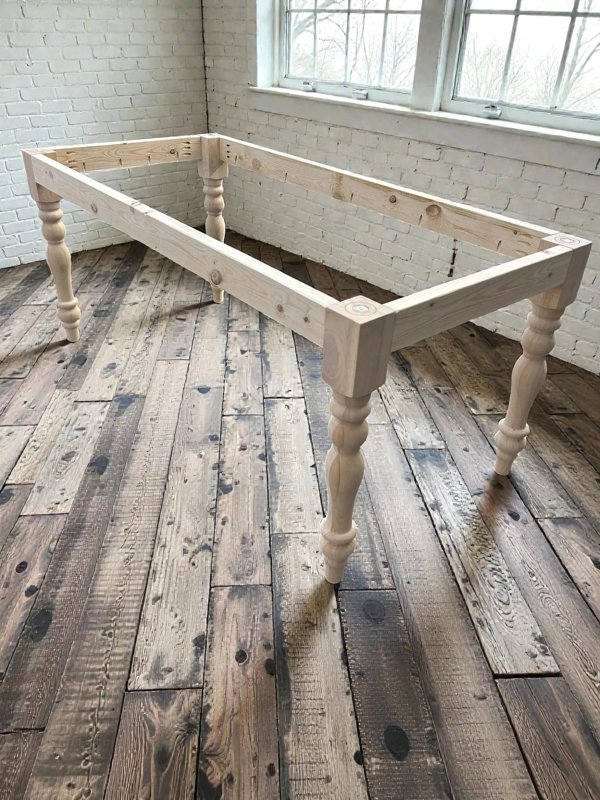
Four unfinished rubberwood turned legs, prepared pine apron/skirting pieces, and leg-to-apron screws. You supply the top, finish, tools, and suitable top attachments. Assembly instructions are not included; buyers should be comfortable assembling furniture. Legs ship from the supplier and aprons from our shop, so parcels may arrive separately.
Further reading: Bally Block installation guidance on wood movement. Follow your own top maker’s specifications.
Ready to plan your version?
See current kit options, detailed dimensions, price, and availability on Curbside Treasures. Have a particular top in mind? Ask about its dimensions and support needs before ordering.
View the exact turned-leg kit ↗Product details checked October 19, 2026. This guide is written by the seller and features our own kit. General project advice does not replace a top-specific assembly or mounting plan.