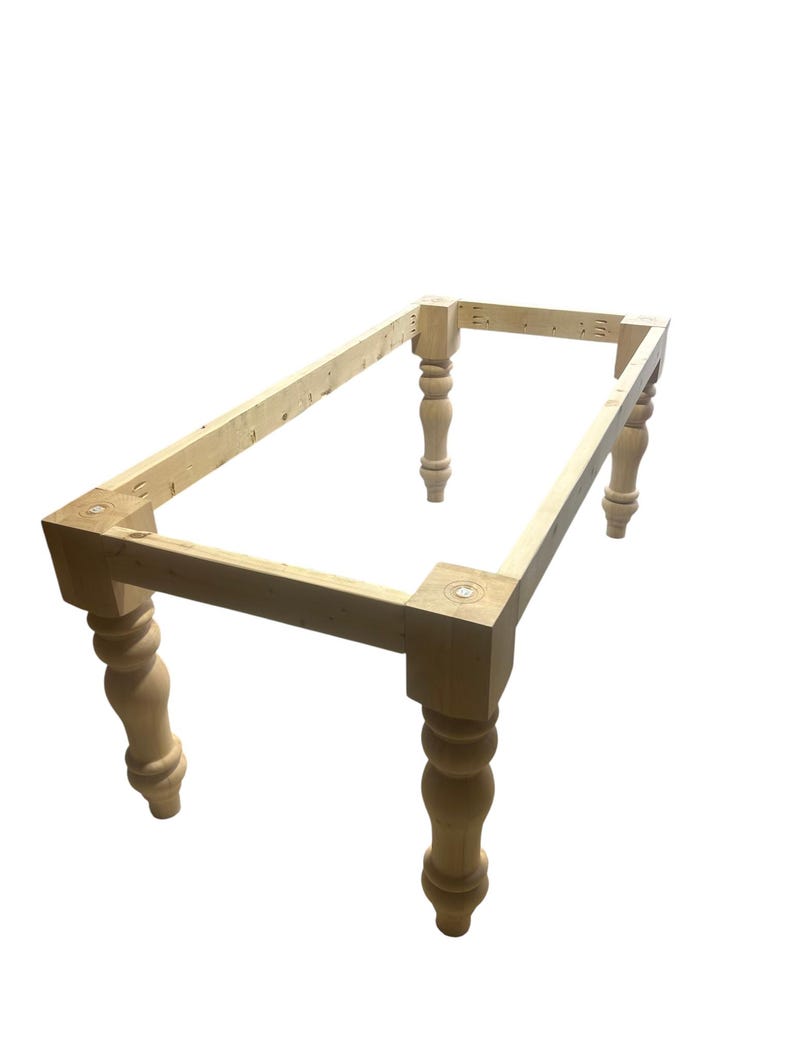
For a small furniture shop, time spent laying out repeatable base components competes with the time needed for custom tops, finishing, and quality control. A pre-cut base kit may fit some builds, but a responsible maker still needs to inspect, assemble, finish, and stand behind the finished work. Here are six checkpoints before adding it to a paid project.
Match the advertised dimensions to the actual commission
The four standard assembled base footprints are 56 × 25, 56 × 31, 66 × 25, and 66 × 31 inches, each 28.5 inches tall. Match the client’s planned top size and overhang; do not treat the kit as infinitely adjustable.
Decide which shop work you are actually outsourcing
The supplier provides the rubberwood turned legs while Curbside Treasures makes the pine apron components. The parts arrive unfinished and drilled for pocket-hole joinery. You still handle top fabrication, build verification, finish, and installation details.
Inspect parts and dry-assemble before a customer deadline
Count every leg, skirting piece, and included joint screw. Check pocket holes, squareness, fit, and visible surface quality before finishing. Because legs and aprons may ship separately, allow a buffer for receipt and inspection.
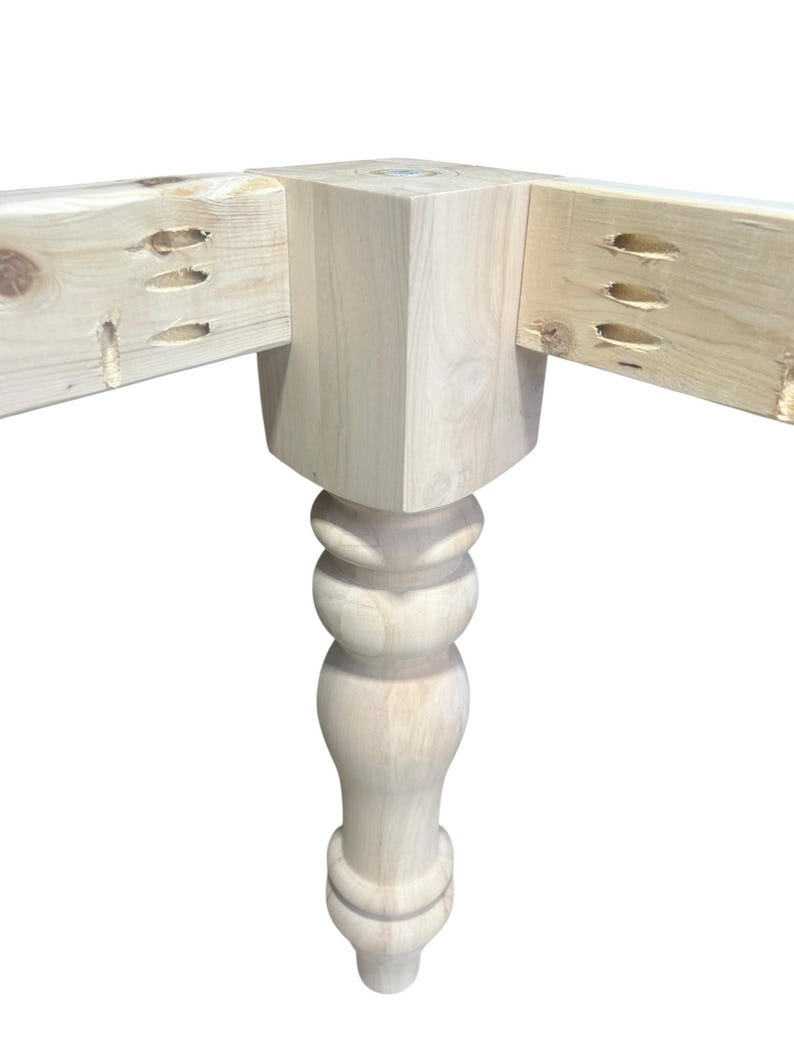 Actual kit photo from our listing · if unavailable, a concept diagram is shown · tabletop not included
Meet the unfinished base kit
Four sculpted chunky legs and pre-cut, predrilled apron pieces. Bring your own tabletop, top fasteners, finish, tools, and assembly know-how.
Shop the base kit ↗Own the top-attachment specification
A production process needs repeatable documentation about thickness, movement, fastening, and final height. The kit does not include top screws or a formal step-by-step assembly guide, so standardize your own safe process and perform appropriate checks.
Quote the complete job, not just the kit price
Include a custom tabletop, prep, finish, hardware, assembly labor, customer coordination, packaging, and any delivery or installation. A reduced time investment in leg fabrication is useful only if the overall margin and quality still work.
Be precise about what you promise a client
Never claim the base is a load-tested commercial system or that Curbside Treasures warrants your final assembled table. Explain the species mix, finish expectations, and your own workshop’s workmanship policies. Your customer is buying your finished build, not the supplier’s marketing copy.
Before you order
Evaluate the base as a component source in your own vetted workflow—not as a substitute for design, quality control, or accountability.
Questions builders ask
Can a workshop use the base for client projects?
The listing markets the kit to woodworkers and custom builders. Confirm any resale or commercial-use questions directly with Curbside Treasures.
Does it arrive with a finished tabletop?
No. The builder supplies and attaches the top.
Are apron and leg components likely to ship separately?
Yes. The legs come from the leg supplier; apron/skirting pieces are made in the shop and may arrive in separate packages.
The Shopify listing shows current choices, price and availability. Purchases are completed through Curbside Treasures, not this editorial site.