An unfinished kit gives you the freedom to make a dining table fit your room instead of accepting one preselected color. This particular base combines rubberwood turned legs with pine apron pieces, so finishing them deserves a thoughtful test. These ideas help you plan the look and avoid predictable surprises.
Begin with the room, not the stain shelf
Photograph your flooring, walls, and the tabletop you intend to use in natural and evening light. Choose whether you want the base to blend in or stand out. That decision makes samples far more useful.
Test pine and rubberwood separately
Two wood species can absorb the same stain differently. The legs are rubberwood, and the skirting is pine. Test representative offcuts or inconspicuous areas using the same preparation, stain, and protective topcoat process you expect to use.
Do not skip preparation just because the kit is sanded
The pieces arrive hand-cut and sanded, but finishing preparation still depends on your system. Inspect surfaces for scratches, glue residue, and raised grain. Follow the chosen finish manufacturer’s directions rather than assuming every wood requires the same grit or conditioner.
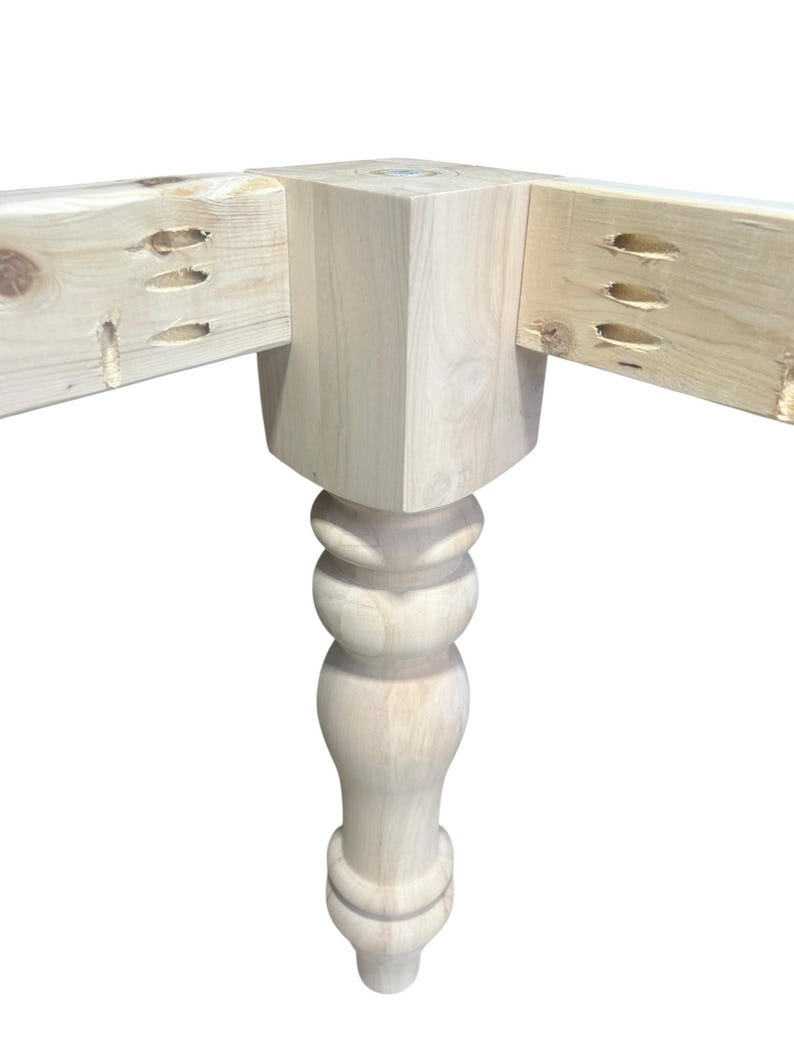 Actual kit photo from our listing · if unavailable, a concept diagram is shown · tabletop not included
Meet the unfinished base kit
Four sculpted chunky legs and pre-cut, predrilled apron pieces. Bring your own tabletop, top fasteners, finish, tools, and assembly know-how.
Shop the base kit ↗Consider paint when perfect color matching matters
A painted base can make two wood species read as one cohesive color, especially under a darker wood top. If your look is distressed or antiqued, practice on a sample piece first so the wear looks intentional rather than random.
Let a stained base show the wood when variation is welcome
Stain can celebrate natural wood grain, but be prepared for differences in tone and absorption. A test coat with the actual protective finish is more representative than bare stain alone.
Select a durable finish appropriate to the room
A dining table base sees shoes, bumps, mops, and occasional spills. Use a finish system compatible with the primer or stain, and follow drying and cure time instructions. Avoid making durability claims without knowing the actual products used.
Finish the components in a logical sequence
Think through which surfaces will be hard to reach after assembly. Mask joint areas where necessary for a sound fit, label matching parts, and follow all ventilation and safety instructions. Dry-fitting first helps prevent a beautiful finish from hiding a misaligned joint.
Before you order
Order unfinished if you want control, but test complete finish systems on both rubberwood and pine before coating visible surfaces.
Questions builders ask
Does the kit arrive painted or stained?
No. The base components are unfinished so the buyer can paint, stain, or finish them.
Are all components the same kind of wood?
No. The chunky turned legs are rubberwood and the apron/skirting is pine.
Is there a guaranteed stain recipe for a perfect match?
No. Wood and preparation vary, so sampling is essential.
The Shopify listing shows current choices, price and availability. Purchases are completed through Curbside Treasures, not this editorial site.